
Rescuing the Modern Screen
Modern software should feel like a pocket-sized amusement park
Rachele Smith
7/24/20262 min read
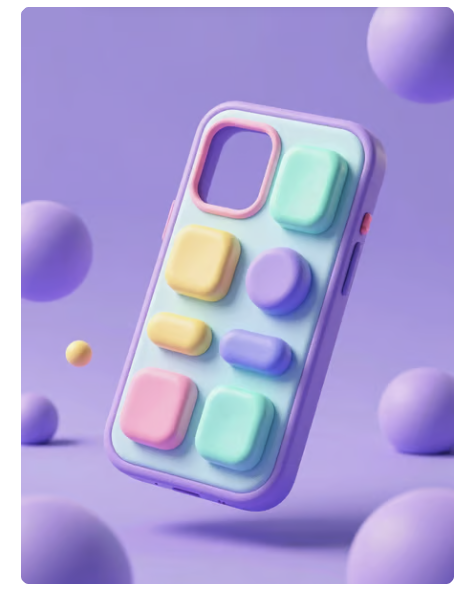
Somewhere along the way, our screens became suspiciously well-behaved.
Every tap became efficient. Every button aligned itself with military precision. Every notification arrived carrying the emotional warmth of a parking ticket. We polished our apps until they gleamed, then wondered why they felt so forgettable.
The modern screen, for all its astonishing intelligence, has become a little too serious.
Once upon a time, computers were places to explore. They whirred, chirped, bounced, and occasionally surprised you. Opening a program felt less like clocking into work and more like peeking behind a mysterious little door. There was delight hidden in corners. Easter eggs lived beneath menus. Even loading screens had personalities.
Today, software often feels like an airport terminal. Everything is optimized. Everything is frictionless. Everything is... beige.
But friction isn't always the villain.
A tiny pause before an animation finishes. A button that wiggles because it's excited. A pixelated character cheering you on after completing a task. These moments don't slow us down nearly as much as they wake us up. They remind us that someone, somewhere, made this thing with a grin on their face.
That's the kind of software we believe deserves rescuing.
Our studio doesn't chase sterile perfection. We chase curiosity. We make apps that feel less like spreadsheets in disguise and more like pocket-sized amusement parks. The kind where every swipe might reveal a tiny joke, an unexpected animation, or a cheerful sound that nobody strictly asked for but everybody secretly enjoys.
Pixels are welcome here.
So are bright colors, oddball characters, playful interactions, and delightful nonsense that serves no measurable business objective except making someone smile during an otherwise ordinary Tuesday.
There's a peculiar magic in software that refuses to act like software.
When an interface winks instead of warns, celebrates instead of merely confirms, or rewards exploration instead of demanding compliance, something changes. The screen stops feeling like a machine and starts feeling like a companion.
Ironically, that playfulness often makes products more memorable, not less usable. Humans are remarkably good at remembering things that make them laugh. Surprise is sticky. Delight creates landmarks inside an interface. A joyful interaction can guide us just as effectively as another gray tooltip.
Of course, this isn't an invitation to chaos. Nobody wants a calculator that suddenly bursts into confetti every time it solves two plus two. Playfulness works best when it's intentional, tucked neatly into the experience like hidden treasure waiting to be discovered. The utility still matters. It simply doesn't have to arrive wearing a necktie.
Technology has become astonishingly capable. Now it deserves to become a little more charming.
Perhaps rescuing the modern screen doesn't require another productivity feature or another AI-powered shortcut. Perhaps it starts by remembering that the people behind those screens are wonderfully human—curious, playful, easily delighted, and occasionally in need of a tiny digital carnival.
So here's to software with personality. To cheerful pixels. To unnecessary animations that somehow feel entirely necessary.
After all, life already provides enough boring rectangles.
Our screens don't have to be among them
MKE Entertainment
Making software feel like a pocket-sized amusement park.
Drop a line
admin@mkeentertainment.com
Based in San Francisco Bay Area, CA
Available for meaningful collaborations
© 2026 MKE Entertainment-Making software feel like a pocket-sized amusement park.
Home-Apps-Process-Blog-Contact